




Structural concrete is one of the most important parts of any commercial, industrial or multi-story building. It is also one of the least visible once the project is complete.
Finished floors, exterior materials and interior details often get the most attention. But the long-term performance of a building depends on the concrete elements that carry the structure, transfer loads, support future floors and protect the integrity of the entire project.
At Absolute Concrete, structural concrete is treated as a critical scope of work that demands planning, field control, experienced crews and strong coordination from start to finish.
What Is Structural Concrete?
Structural concrete is concrete designed to carry loads and support a building or structure. Unlike non-structural concrete that may serve primarily as a surface, structural concrete becomes part of the building’s load-bearing system.
Common examples of structural concrete include:
- Foundation walls
- Footings and grade beams
- Columns and beams
- Post-tensioned slabs
- Elevated decks
- Podium slabs
- Shear walls
- Stair and elevator cores
- Parking structure slabs and ramps
- Heavy equipment foundations
- Structural slab on grade placements
In many commercial and multi-story projects, structural concrete is what allows the building to rise, remain stable and perform as designed for decades.
Structural Concrete Is More Than a Higher PSI
One of the biggest misconceptions in construction is that better concrete simply means specifying a higher-strength mix.
While mix design is important, structural concrete excellence depends on far more than compressive strength. The long-term performance of a structure is shaped by how the concrete is planned, supplied, placed, consolidated, protected and cured.
A strong structural concrete placement depends on:
- The correct mix design for the application
- Proper workability without adding excess water on site
- Reinforcement that is correctly detailed, spaced and supported
- Placement planning that accounts for timing, access and volume
- Proper vibration to reduce voids and honeycombing
- Continuous field supervision during critical placements
- Curing practices that protect long-term durability
Higher-strength concrete can still perform poorly if the placement is rushed, poorly coordinated or not properly cured. Structural concrete requires discipline at every stage.
Why Structural Concrete Matters
Structural concrete is often hidden after construction, but it affects almost everything that comes after it.
It influences how loads are transferred through the building. It impacts how future floors, walls and framing are supported. It plays a role in durability, service life, cracking control and long-term building performance.
For owners, developers and general contractors, the quality of structural concrete affects more than the concrete scope itself. It affects schedule, safety, inspections, trade coordination and confidence in the work that follows.
When structural concrete is done right, the building has a stronger foundation for long-term success. When it is done poorly, problems can be difficult, expensive or impossible to correct after the fact.
What Does Structural Concrete Excellence Require?
1. Pre-Placement Planning
Successful structural concrete work begins with planning. Crews need to understand access, placement methods, reinforcement congestion, pump setup, concrete volume, finishing requirements, inspection needs, and the sequence of work around other trades.
This planning helps reduce delays, improve quality control, and keep the placement moving safely and efficiently.
2. Proper Reinforcement Coordination
Reinforcing steel is one of the most important parts of structural concrete. Concrete must be able to flow around the steel and fully encapsulate it.
If reinforcement is too congested, poorly supported or not properly coordinated, it can create problems during placement. Experienced crews understand how rebar spacing, clear cover, embeds, and penetrations affect the final result.
3. Controlled Concrete Placement
Structural concrete needs to be placed in a controlled and consistent way. This is especially important in heavily reinforced walls, foundations, decks, and post-tensioned slabs.
Poor placement practices can lead to segregation, cold joints, voids or areas that do not consolidate properly. Careful placement helps maintain the integrity of the concrete and supports the design intent of the structure.
4. Proper Consolidation
Vibration is critical in structural concrete, especially around reinforcement and embeds. The goal is to eliminate trapped air and help the concrete fully surround the reinforcing steel.
Too little vibration can leave voids. Too much vibration can cause segregation. Proper consolidation takes experience, timing and attention from the crew throughout the placement.
5. Curing and Protection
Curing is one of the most important and often overlooked parts of concrete performance. Even a well-designed mix and well-executed placement can underperform if curing is compromised.
Proper curing helps concrete gain strength, reduce surface defects and improve long-term durability. On structural concrete projects, curing should never be treated as an afterthought.
Post-Tensioned Slabs and Structural Slab on Grade Work
Post-tensioned concrete is a major part of many larger commercial and multi-story projects. A post-tensioned slab uses high-strength steel tendons that are stressed after the concrete reaches the required strength. This helps control cracking, improve load distribution and support larger or more demanding structural designs.
A slab on grade can also be structural when it is designed to carry specific loads, support building systems or act as part of the engineered structural system. In these cases, the placement requires more than standard flatwork experience.
Post-tensioned and structural slab on grade placements require careful attention to:
- Tendon layout and protection
- Reinforcement coordination
- Concrete thickness and elevations
- Placement timing
- Finishing requirements
- Curing practices
- Coordination before stressing
These placements are a strong example of how structural concrete connects field execution with engineering requirements.
Structural Concrete in Multi-Story Construction
As commercial and multifamily buildings become larger and more complex, structural concrete plays an even greater role.
Podium-style apartments, mixed-use developments, senior living communities, parking structures and vertical construction projects all rely on concrete elements that must perform under significant loads.
- Structural concrete supports:
- Below-grade and podium parking
- Multi-story residential buildings
- Commercial buildings with complex loading needs
- Elevated slabs and decks
- Stair and elevator cores
- Long-term durability in high-use areas
For these projects, the concrete contractor must be able to work closely with the general contractor, structural engineer, ready-mix supplier, inspection team and other trades. Communication and coordination are just as important as the placement itself.
Absolute’s Approach to Structural Concrete
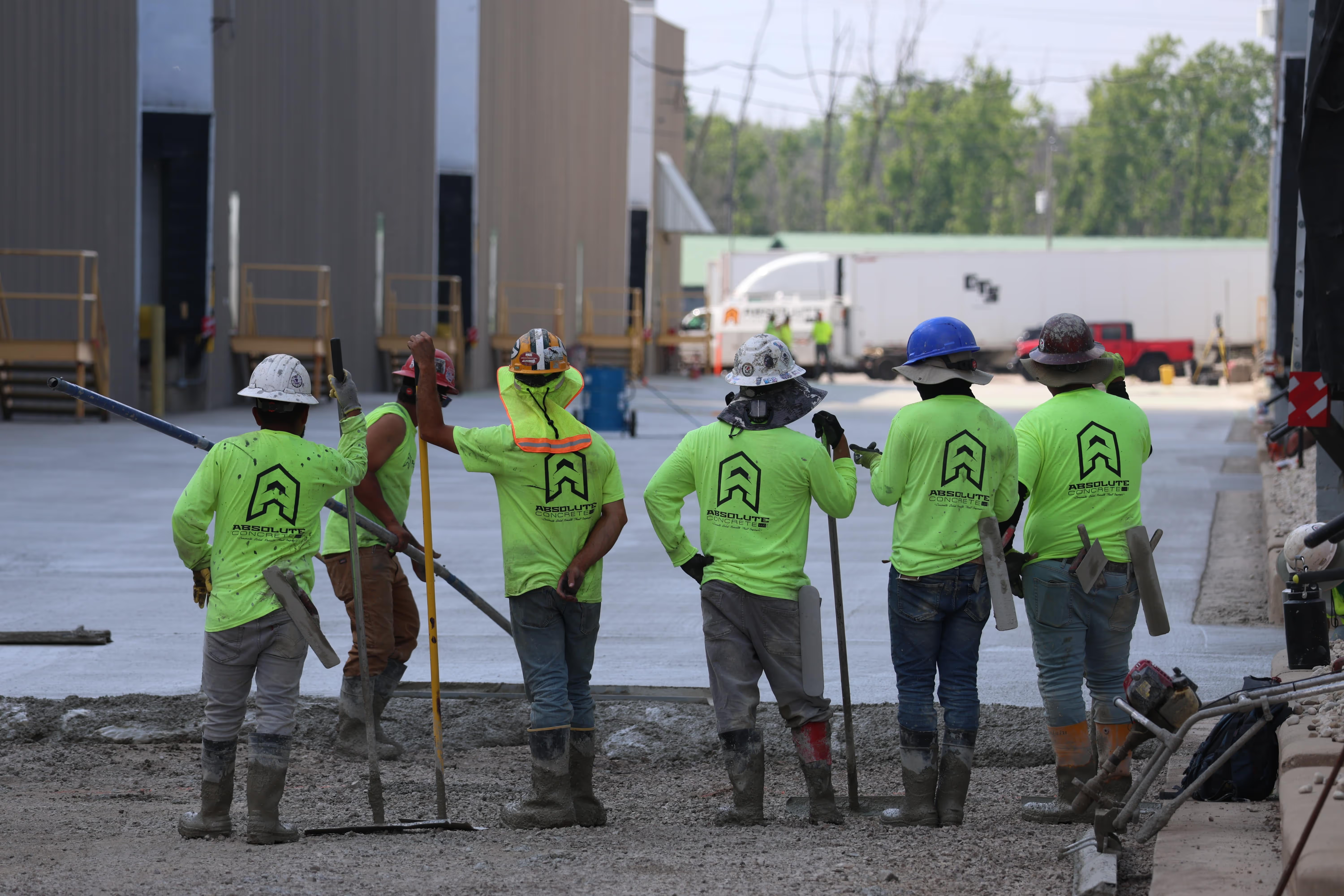
Absolute Concrete brings a field-driven approach to structural concrete work across Wisconsin and the Midwest.
Absolute understands that structural concrete is not just another placement. It is a critical part of the building system. That is why the team focuses on planning, coordination, crew experience and execution at every stage.
- Absolute’s structural concrete approach includes:
- Experienced crews for commercial and multi-story concrete work
- Coordination with general contractors, engineers and inspection teams
- Planning around reinforcement, access, pumping and schedule
- Owned equipment to support efficient field operations
- Careful attention to placement methods and consolidation
- Communication before, during and after critical placements
From foundation walls and structural slabs to podium decks, post-tensioned slabs and large commercial placements, Absolute is built to support projects where concrete performance matters.
Why Choosing the Right Structural Concrete Contractor Matters
Structural concrete leaves little room for shortcuts.
Once concrete is placed inside heavily reinforced walls, slabs or structural elements, there is limited opportunity to correct what happens inside. That makes contractor selection critical.
The right structural concrete contractor brings more than manpower. They bring planning, technical understanding, field leadership and the ability to coordinate with the full project team.
For developers, owners and general contractors, that means fewer surprises, stronger communication and greater confidence in the work that supports the entire building.
Common Questions About Structural Concrete
What makes concrete structural?
Concrete is structural when it is designed to carry loads or act as part of the building’s support system. This can include foundations, walls, columns, beams, decks, post-tensioned slabs and engineered slab on grade placements.
Is slab on grade considered structural concrete?
Some slab on grade work is structural and some is not. A slab on grade becomes structural when it is engineered to support specific building loads, equipment loads or structural requirements.
Why is structural concrete important in multi-story construction?
Multi-story buildings rely on structural concrete to transfer loads, support floors, create stability and provide long-term performance. It is one of the most important parts of vertical construction.
What can cause problems in structural concrete?
Common issues include poor planning, improper workability, reinforcement congestion, inadequate consolidation, cold joints, segregation and poor curing. Many of these problems can be reduced through experienced field execution and strong coordination.
Why does curing matter for structural concrete?
Curing helps concrete gain strength and durability. Without proper curing, even a good mix and a well-executed placement can fail to reach its full performance potential.
Building Strength That Lasts
The best structural concrete work is not always the most visible part of a finished project, but it is one of the most important.
It supports the building. It protects long-term performance. It gives owners, developers and contractors confidence in what comes next.
Absolute Concrete is proud to support commercial, industrial and multi-story projects with structural concrete solutions built around planning, coordination and field execution.
For projects where strength, durability and performance matter, Absolute Concrete is ready to help build from the structure up.
we're hiring.
Join our team.



© This is a © Absolute Concrete, LLC | Designed by PRESENcE. template powered by


.svg)